
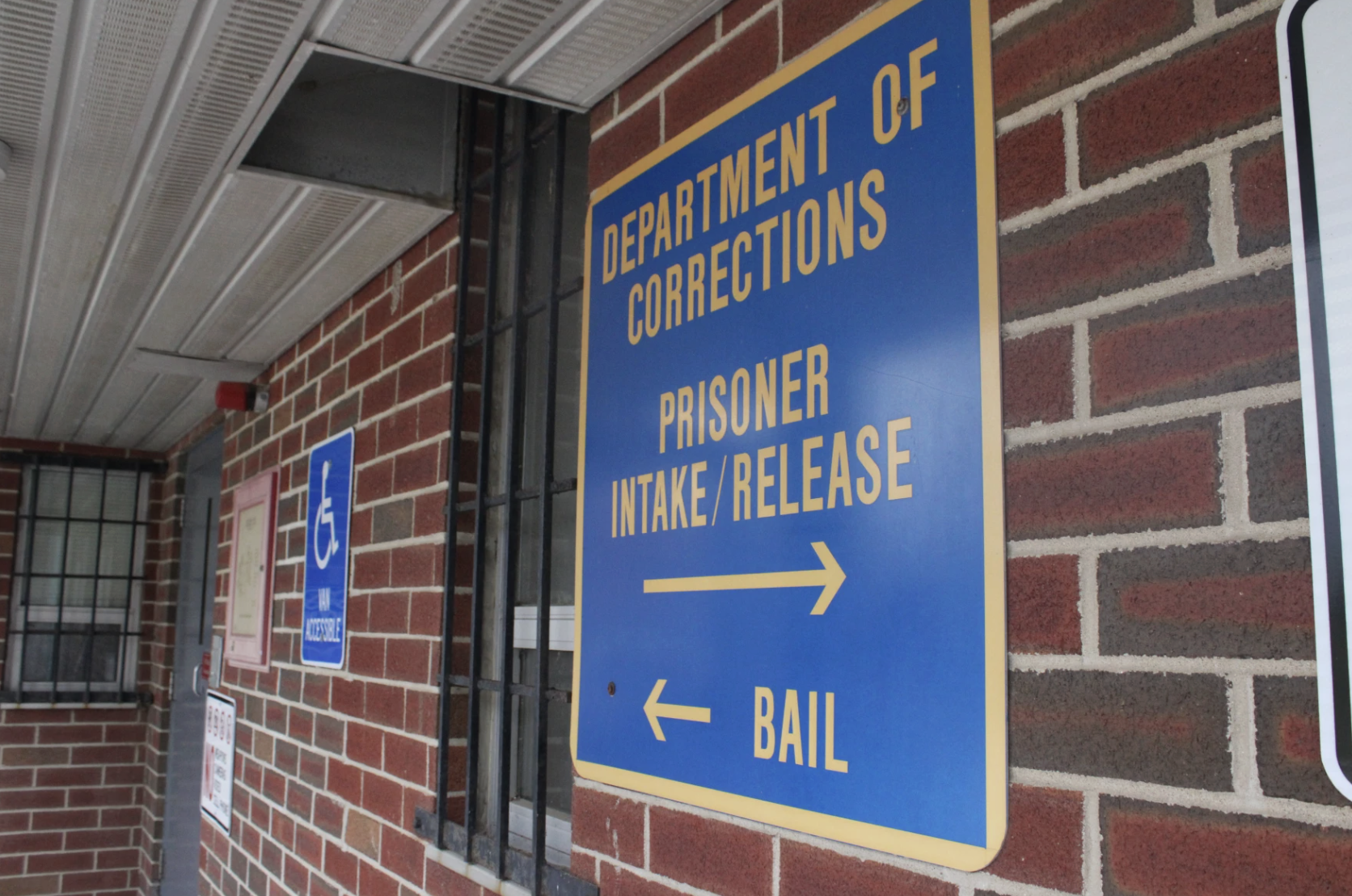
Mirna Gutierrez stands anxiously outside the door of the Rockingham County jail on a late September afternoon. It’s windy, and she’s wearing a black hoodie with the image of the Virgin of Guadalupe printed on the back. It belonged to her husband, Oscar Gutierrez. She says it still smells like him.
Mirna and a few friends went to the jail to bail Oscar out after a DWI arraignment. Even though Mirna is a citizen and Oscar has lived in Manchester for nearly two decades, Oscar is originally from Honduras and has a complicated immigration history. The jail had to notify ICE they’re letting Oscar go, and it was unclear to Mirna whether the bail commissioner or ICE was going to arrive first.
“They say they’re looking for criminals,” she said in Spanish. “But the only one who has changed my life and well-being is my husband. He’s the reason I’m alive. If it weren’t for him, I would be dead.”
Like Oscar and Mirna, thousands of families have been caught in a very specific wrinkle of U.S. law over the past year: the complex interaction between criminal and civil immigration courts.
Although nearly 80% of New Hampshire immigration detainees last year did not commit any crime, ICE’s increasingly aggressive tactics mean that any interaction with the criminal justice system could lead to ICE detention for some immigrants.
Buzz Scherr, who chairs the International Criminal Law and Justice Program at the University of New Hampshire, said that even though New Hampshire has a particularly strong DWI law, the crime itself doesn’t matter to ICE.
“It’s nothing specific to a DWI,” he said. “It could be a simple assault. It could be a disorderly conduct. It could be a criminal trespass. It could be anything, any crime at all. They’re going to run the name through the computer and see if there’s an ICE detainer.”
Read the full story at www.nhpr.org/
NH Latino News produces and amplifies stories focused on the responses to the social determinants of health, which include healthcare access and quality, education access and quality, social and community context, economic stability, along with one’s built environment.
Featured Photo: The Rockingham County jail bail window, Sept. 23, 2025. Photo by Lau Guzmán/ NHPR