
MANCHESTER — For more than a decade after the historic Latin American Center in Manchester closed its doors in 2009 due to a lack of funding, New Hampshire’s growing Hispanic population lacked a secular cultural and service hub. Today, Centro Latino de New Hampshire is filling that void, serving as a vital lifeline for bilingual navigation, civic advocacy, and cultural connection across the state.
Co-founded by longtime community advocates Eva Castillo and Dr. Trinidad Tellez, the Manchester-based nonprofit was built from the ground up to serve a Hispanic and Latino population that now makes up roughly five percent of the state. While headquartered in New Hampshire’s largest city, its organizers emphasize that their mission extends well beyond municipal boundaries.
“We say our purpose is to build a self-sufficient, healthy and civically engaged New Hampshire Latino community through education, services, culture and arts programming,” Tellez told WMUR when launching the independent nonprofit. “This is not just for Manchester. We’re very intentional. This is Centro Latino de New Hampshire for everyone to thrive.”
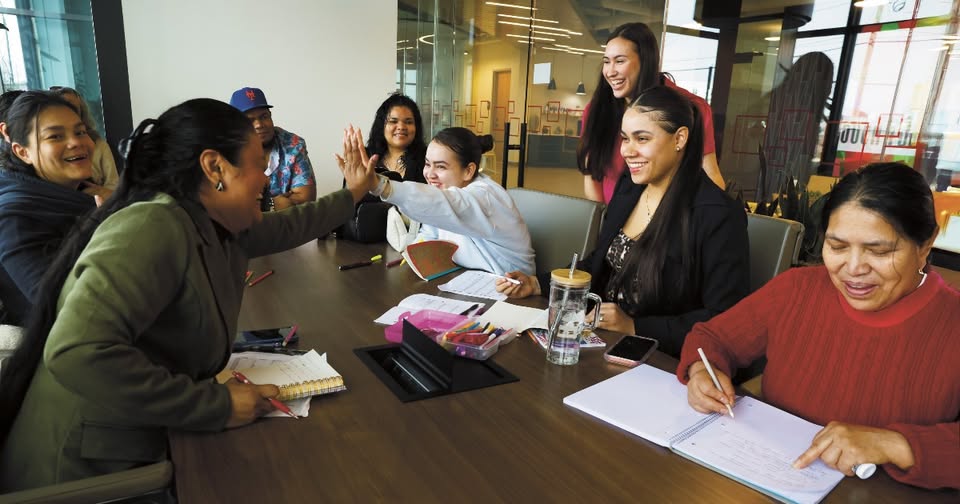
Staffed entirely by bilingual and bicultural community members, the organization offers free educational and wellness programs designed to help newcomers and longtime residents alike navigate daily life. According to the organization’s profile on NH Gives, services range from English and U.S. citizenship classes to job search assistance, maternal support groups, and interpretation.
As highlighted by the New Hampshire Charitable Foundation, the center also serves an equally important social role: providing a welcoming space where residents can simply drop in, speak Spanish without hesitation, and find solidarity.
Beyond direct social services, Centro Latino actively brings residents together through public cultural and educational events. Throughout 2026, the group has partnered with local institutions to host family-friendly programming—such as a bilingual “Fiesta de Ciencia” (Science Festival) at Manchester’s SEE Science Center—while collaborating on statewide community surveys and civic engagement drives.
For Castillo, who previously worked at the original Latin American Center decades ago and has spent her career fighting for immigrant rights in New England, the organization represents the realization of a long-held vision for community empowerment.
“I want to see the Latino community use their power,” Castillo told New Hampshire Public Radio in a profile of her advocacy work. “They’ve believed the lie that we are invisible, don’t count for anything. We aren’t second-class citizens.”
By combining everyday practical assistance with cultural pride and grassroots organizing, Centro Latino de New Hampshire continues to ensure that the state’s diverse Latino residents—tracing their roots across Latin America—have the resources and representation needed to build lasting roots in the Granite State.